Moesano
Websites in the Val Calanca
The side valley of the Calancasca: five municipalities, few inhabitants — and the audience that matters living outside it
- Municipalities
- Buseno, Calanca, Castaneda, Rossa, Santa Maria in Calanca
- Calanca municipality
- Created in 2015 from Arvigo, Braggio, Cauco and Selma
- Torrent
- The Calancasca, from 332 m at the mouth to 3163 m
- Lago di Buseno
- Formed by the Molina dam, opened in 1951
01
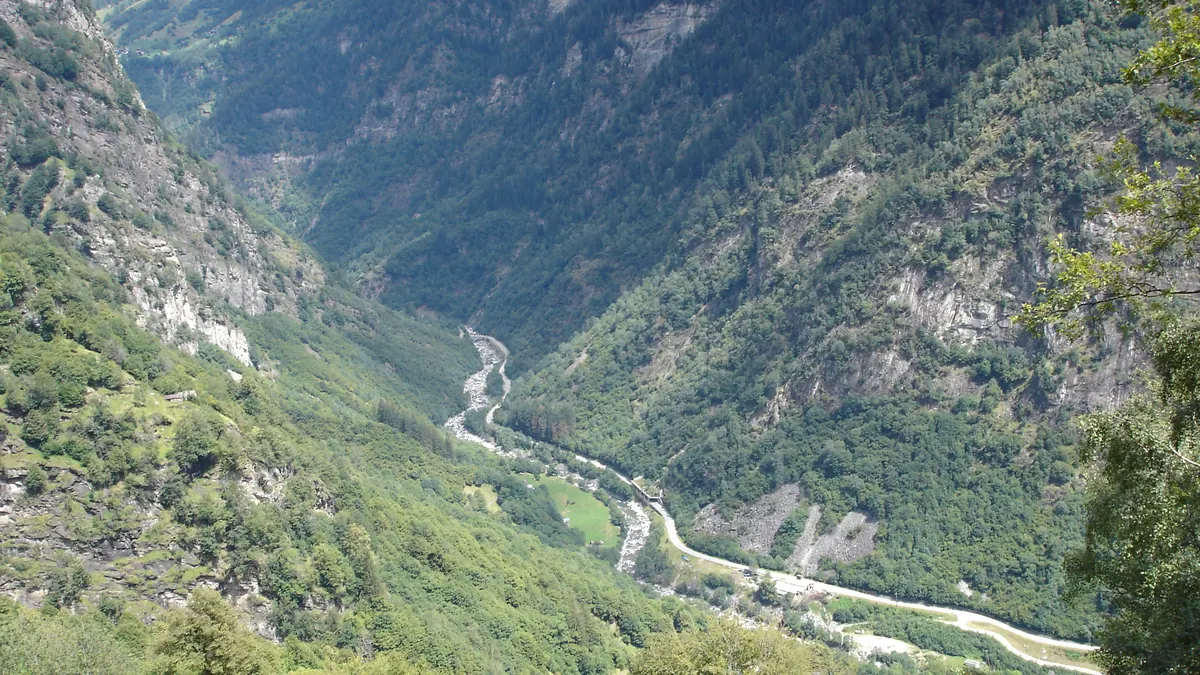
The Calanca branches off at Grono and climbs along the Calancasca from 332 metres at its mouth to over three thousand at the peaks, chestnut woods below and alpine pasture above. Five municipalities — Buseno, Calanca, Castaneda, Rossa and Santa Maria in Calanca — and a population that has fallen hard: from more than two thousand once to 809 in 2000, before the decline levelled off.
Here the arithmetic is the opposite of the main valley. Local competition barely exists: if you run a business in the Calanca you are probably the only one doing it in the whole valley. The problem is not beating your neighbour, it is being found by people who live elsewhere — and they only find you online, because nobody passes through here by accident.
Anyone letting a rustico, selling cheese from the alp, working granite or keeping the only place to eat open: for all of them the website is not another sign, it is the sign.
02
Why a website counts for more here than elsewhere
In a valley nobody drives into by mistake, everything that arrives has arrived because someone searched. A B&B in the Calanca that does not come up for «where to stay Val Calanca» simply does not get that call — no roadside sign will fix it.
There is an advantage the valley floor does not have, though: online competition here is close to zero. Being found for the name of your own valley costs far less effort in the Calanca than in Roveredo — as long as there is something to find.
03 — In practice, here
The valley’s name matters more than yours
Nobody searches for your village: they search «Val Calanca». The site has to say where the valley is, how to get there and how long it takes.
Whoever is searching is already travelling
They search from a phone, often on a weak signal. Light pages, a number that dials with one tap, an address that opens the map.
Two sharply separate seasons
Chestnuts and the alp do not fall in the same months. A site you can update yourself in ten minutes, instead of one still showing September in June.
04 — The villages of the valley
We did not build a page for each one: it would have been the same page five times with a different name on it, and search engines punish exactly that. Here is what actually needs saying, village by village.
Buseno
The first village on the way up, above the lake formed by the Molina dam in 1951. Barely ninety inhabitants: anyone running a business here necessarily works with the whole valley and with people from outside it.
Castaneda
On the sunny terrace at the mouth of the valley, looking out over the Mesolcina. A good position for anyone letting rooms: you are in the Calanca, yet the valley floor and the motorway stay minutes away — exactly what people want to know before booking.
Santa Maria in Calanca
The village of the collegiate church, one of the most visited spots in the valley. Anyone working in tourism here has a rare advantage: a reason to come that already exists, and only needs telling well.
Arvigo, Braggio, Cauco, Selma
Since 2015 a single municipality, Calanca. For a business that is a practical problem: people still search for their own village name, and an address that says only «Calanca» no longer tells anyone where you are.
Rossa
At the head of the valley, the last village before the alp. Anyone driving up this far has decided to: the website is what helps them decide beforehand, with opening times that are true.